

Dance has always played a central role in celebrations, but this year it is evolving faster than ever before. From weddings and corporate parties to birthday celebrations and cultural gatherings, dance is no longer just entertainment between speeches or meals. It has become a highlight experience that shapes the energy of the entire event.
Modern event planners, hosts, and guests are embracing interactive dance formats, social media–influenced choreography, and inclusive styles that encourage everyone to participate. The result is a shift away from passive audiences toward shared movement experiences that bring people together in memorable ways.
Understanding the dance trends shaping events this year can help hosts create gatherings that feel modern, engaging, and unforgettable.
Why Dance Is Becoming the Centerpiece of Modern Events
Dance is increasingly moving from the background to the spotlight because events themselves are changing. Guests today expect immersive experiences rather than traditional formats.
Several factors explain this shift:
- Shorter attention spans encourage dynamic programming
- Social media rewards visually engaging moments
- Guests value participation over observation
- Cultural blending encourages diverse dance styles
- Music accessibility expands global influence
As a result, dance is now a primary tool for creating connection and excitement at events of every size.
Choreographed Group Dances Are More Popular Than Ever
One of the biggest trends this year is the rise of structured group choreography. Instead of spontaneous dancing alone, guests are joining coordinated routines that create shared memories.
These dances are especially common at:
- Weddings
- School celebrations
- Corporate retreats
- Birthday milestones
- Cultural festivals
Hosts often introduce short routines before the event or teach simple steps during the gathering itself. Because the choreography is easy to follow, guests of all skill levels can participate comfortably.
Group dances help break social barriers quickly and encourage guests to interact with people they may not already know.
Line Dancing Is Making a Strong Comeback
Line dancing has returned in a fresh and modern way. Unlike older versions tied to specific music styles, today’s line dancing blends pop, country, electronic, and global rhythms.
Event planners appreciate line dancing because it:
- Requires no partner
- Works well for large groups
- Builds energy quickly
- Encourages participation across age groups
- Fits indoor and outdoor venues equally well
Its structured movement makes it especially effective at events where guests may not initially feel comfortable dancing freely.
Social Media–Inspired Dance Challenges Are Influencing Event Floors
Short-form video platforms continue shaping how people interact with music and movement. Viral choreography trends now appear regularly at parties and celebrations.
Guests often recognize these moves instantly, which creates excitement and familiarity.
Popular characteristics of these dances include:
- Short repeatable sequences
- High-energy gestures
- Expressive arm movement
- Sync-friendly timing with music beats
- Easy adaptation for groups
Hosts sometimes build entire event moments around trending routines to create shareable experiences that extend beyond the event itself.
Cultural Fusion Dance Styles Are Taking Center Stage
Modern celebrations increasingly reflect diverse guest lists and multicultural communities. This year’s events highlight dance styles that blend traditions from multiple cultures into a single shared experience.
Examples include combinations such as:
- Latin rhythm with pop choreography
- South Asian wedding routines with hip-hop elements
- Afrobeat-inspired group dances
- Mediterranean circle dance variations
- Middle Eastern rhythm integrated with electronic beats
Cultural fusion dancing allows guests to explore new traditions while honoring familiar ones. It also strengthens inclusivity and participation across different backgrounds.
Wedding Reception Dance Performances Are Becoming Storytelling Moments
Wedding dances have evolved from simple first-dance traditions into expressive performance highlights. Couples now prepare routines that reflect their personalities and shared journeys.
These performances often include:
- Mixed song sequences
- Costume changes
- Surprise group participation
- Parent dance collaborations
- Flash-mob-style guest involvement
Rather than a formal obligation, wedding dances are becoming emotional and entertaining storytelling experiences that shape the tone of the entire celebration.
Interactive Dance Floors Are Transforming Guest Participation
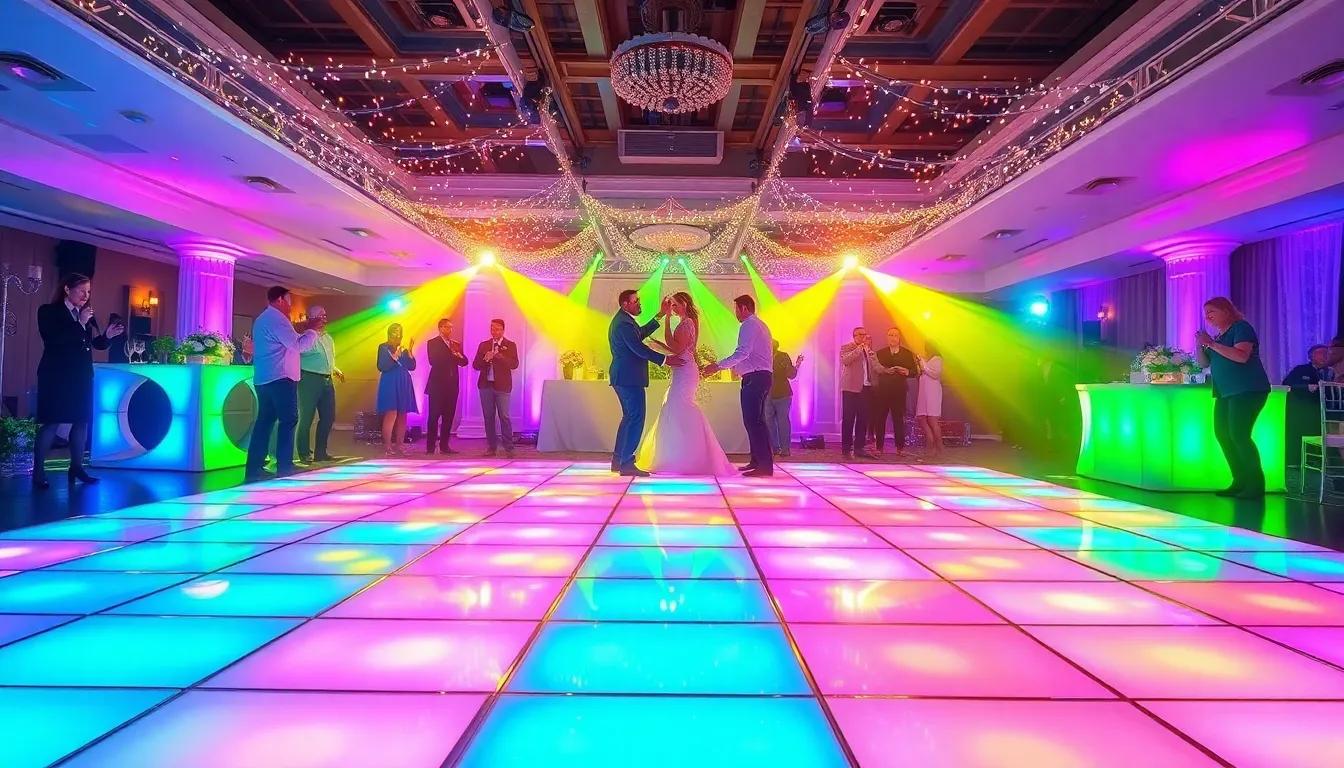
Technology is reshaping how people experience dance at events. Interactive lighting systems, projection floors, and music-reactive visuals create environments that encourage movement naturally.
Modern dance floors may include:
- Color-changing LED panels
- Motion-triggered visuals
- Beat-synchronized lighting
- Projection mapping effects
- Responsive stage platforms
These elements turn dancing into a shared sensory experience rather than a simple activity.
Guests often spend more time on the dance floor when the environment itself feels dynamic and responsive.
Silent Disco Experiences Are Expanding Across Event Types
Silent disco setups are no longer limited to music festivals. They are appearing at weddings, corporate events, college celebrations, and private parties.
Guests wear wireless headphones and choose between multiple music channels, creating personalized dance experiences within the same shared space.
Benefits of silent disco formats include:
- Multiple music tastes satisfied simultaneously
- Lower noise restrictions for venues
- Extended dance hours
- Increased guest engagement
- Unique visual appeal
Silent discos also encourage guests who might normally avoid dancing to participate more comfortably.
Nostalgia-Inspired Dance Sets Are Winning Over Guests
Music from earlier decades continues influencing modern event dance floors. Nostalgia-based playlists encourage participation because guests already recognize the rhythms and choreography styles.
Popular nostalgia influences this year include:
- Early 2000s pop dance routines
- Classic disco revival moments
- Retro hip-hop sequences
- Throwback group choreography
- Vintage-inspired swing movement variations
These familiar styles reduce hesitation and increase confidence among guests who may not consider themselves strong dancers.
Corporate Events Are Using Dance to Build Team Energy
Corporate gatherings are increasingly incorporating structured dance activities to improve engagement. Rather than focusing only on presentations and networking, organizations are adding movement-based experiences that encourage collaboration.
Dance sessions at corporate events help:
- Break social barriers between departments
- Encourage creativity
- Improve team communication
- Increase morale
- Reduce event fatigue
Short guided dance segments often create more memorable experiences than traditional entertainment formats.
Flash Mob Moments Are Returning in New Formats
Flash mobs are making a comeback with updated choreography and improved coordination tools. Instead of surprise-only performances, many events now include semi-planned guest participation flash mobs.
Hosts may distribute rehearsal videos before the event so guests can prepare simple movements in advance.
This approach creates:
- Collective excitement
- Strong audience reactions
- Unexpected energy shifts
- Memorable visual experiences
- Shared achievement moments
Flash mob dances work especially well at milestone celebrations and large gatherings.
Circle Dancing Is Supporting Inclusive Participation
Circle dancing continues gaining popularity because it naturally includes everyone. Guests join hands or move in shared patterns without requiring technical skill.
This format is especially effective at:
- Cultural celebrations
- Family gatherings
- Outdoor festivals
- Community events
- Intergenerational parties
Circle dances create equality on the dance floor. Everyone participates at the same level regardless of experience.
This sense of unity is one reason circle dancing remains a lasting trend.
Personalized Dance Playlists Are Shaping Event Identity
Rather than relying on generic party playlists, hosts are curating personalized dance experiences that reflect their stories and communities.
These playlists often include:
- Songs connected to shared memories
- Cultural favorites
- Family traditions
- Regional hits
- Guest-request segments
Personalization increases emotional connection and encourages more people to join the dance floor.
Guests feel included when they hear music that represents their experiences.
Dance Lessons Before Events Are Increasing Confidence
Another growing trend involves offering short pre-event dance sessions. Couples, teams, or groups learn basic choreography ahead of time so they feel comfortable participating during the celebration.
These sessions help:
- Reduce hesitation
- Improve coordination
- Increase anticipation
- Encourage participation
- Strengthen group bonding
Preparation transforms dancing from a spontaneous challenge into an enjoyable shared activity.
The Future of Event Dance Experiences
Dance trends continue evolving as technology, culture, and social expectations change. However, one pattern remains consistent. Guests want experiences that invite participation rather than observation.
This year’s most successful events include dance elements that are:
- Inclusive
- visually engaging
- culturally diverse
- emotionally meaningful
- easy to learn
- socially interactive
As event expectations continue rising, dance will remain one of the most powerful tools for creating memorable shared experiences.
FAQ Section
1. How can hosts encourage shy guests to participate in dancing at events?
Providing simple guided routines, familiar music, and group-based formats helps reduce hesitation and increases comfort levels.
2. Are professional dancers necessary for modern event choreography?
Professional dancers can enhance performances, but many successful events rely on simple routines that guests learn quickly without formal training.
3. What type of music works best for mixed-age dance floors?
Playlists that combine nostalgic hits with current popular tracks usually attract participation across multiple age groups.
4. How early should choreography preparation begin before an event?
Simple routines can be prepared a few weeks in advance, while larger coordinated performances may require several months of planning.
5. Do interactive dance floors significantly improve guest engagement?
Yes. Lighting effects and responsive visuals often encourage guests to stay longer on the dance floor and participate more actively.
6. Are cultural fusion dances appropriate for formal events?
When planned respectfully and thoughtfully, fusion routines can enhance inclusivity and reflect the diversity of modern guest groups.
7. What role does a DJ play in supporting dance trends at events?
A skilled DJ helps maintain momentum, adjust playlists based on crowd response, and introduce choreography-friendly tracks that keep guests involved throughout the event.

Comments are closed.